It's a common scenario. Typically, businesses are more than willing to create relevant and valuable content for their target audience.
With the continuing rise of global remote work and the wide availability of copywriting and content writing professionals, as well as freelancing platforms, there's no shortage of people who can write great content for websites.
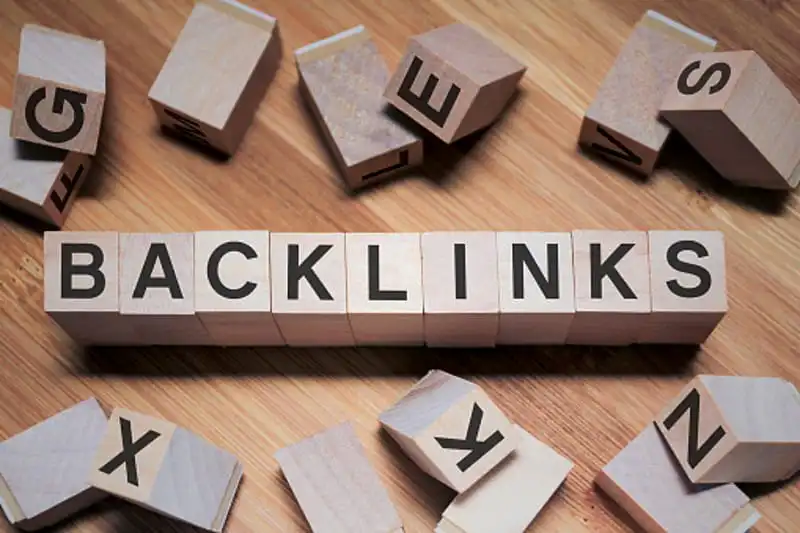
While adding valuable content to a website is relatively easy with the right help, getting these pages to rank is something else. The same scenario affects landing pages, service pages, company pages, and product pages. You must know how to get backlinks to your website.
The Anatomy of a Modern Link-Building Framework
The old playbook of mass-blasting generic outreach emails or buying cheap directory listings is dead. Today, search algorithms evaluate the contextual relevance and the structural authority of your incoming links more strictly than ever. If you want to build a sustainable digital asset, you need to shift from "buying links" to earning digital endorsements.
Developing High-Utility "Linkable Assets"
The most effective answer to how to get backlinks without risking algorithmic penalties is to create content that people are naturally incentivized to reference. Creators, journalists, and industry bloggers do not link to basic summary articles; they link to source data, definitive definitions, and proprietary insights.
The Original Data Play: Run a survey within your industry or aggregate public data into a clean, downloadable spreadsheet. When writers need to back up a claim with a statistic, they will cite your resource as the primary source.
The Mini-Tool Strategy: Building a free calculator, a spreadsheet template, or an interactive checklist gives other websites a permanent utility resource to recommend to their audience.
Need a hand mapping out a content strategy that actually attracts editorial links? Explore our personalized 1-on-1 SEO Training courses to build an step-by-step roadmap tailored to your specific niche.
Leveraging the Frictionless Outreach Framework
Outreach isn't about pitching your homepage; it is about offering a solution to a webmaster’s problem. A highly successful approach revolves around broken link building. By scanning high-authority resource pages in your niche for dead links, you can reach out to the site owner, politely inform them of the broken user experience, and offer your newly created asset as a seamless replacement. It is a value-first transaction where both parties win.
GETTING BACKLINKS TO A WEBSITE FOR THE FIRST TIME IS A TROUBLESOME BOTTLENECK.
While many business owners decide to skip the process and pray that their content naturally ranks, it's essential to realize that if you want faster results, you need to know how to get backlinks to your website in an organized manner.
While natural and editorial backlinks are valuable, they're often completely random. If you want a news site to take notice of how fantastic your services or products are, you may have to wait a year or so to get just one backlink. No one can wait that long to see results. Businesses need to scale or generate more income yesterday.
That's the timeframe many businesses are looking at. Therefore, business owners must study how to get website backlinks and find the right vendors. In addition, knowing the familiar sources of valuable backlinks can help you evaluate SEO professionals and other SEO vendors.
HOW CAN I GET BACKLINKS TO MY WEBSITE?
Local Citations
In SEO parlance, local citations refer to mentions of a business NAP (name, address, and phone number) on another website. Ideally, the referring website should be relevant to your business.
As much as possible, we want to avoid any online citation published on completely unrelated websites. For example, a local citation for a pizza restaurant in New York doesn't make sense if mentioned randomly on a music website.
The purpose of local citations is to signal to Google's algorithm that your website is gaining credibility for specific local search phrases. Local search is the lifeblood of businesses that need to attract more customers from specific geographic locations.
Niche Citation
A niche citation is a business citation published online on websites or platforms about specific markets or industries. For example, if you own a bakery and receive a four-star review on a platform like Yelp, that's a niche citation.
If you're a real estate professional and someone says that they had an excellent experience with you on a real estate reviews website, that, too, is a niche citation. Niche citations are essential to most backlink campaigns.
Blog Comments
Blog comments for SEO are largely misunderstood. Bots try to post links automatically to millions of websites daily, only to get blocked by industry-grade WordPress plugins. If you want to use blog comments for backlink building sensibly, use them to engage authors and other blog readers.
Blog commenting can become a powerful tool for growing your networking and establishing ties with other websites that might be willing to publish your content or link to a few pages on your website.
Guest Posts
Some years ago, naysayers predicted the demise of guest posts as an effective way to increase backlinks and website relevance. However, as of this writing, SEO vendors still provide essential guest posting services to help websites get ahead. Pitching a topic to a relevant website with an audience and getting a link from that website is one of the most straightforward ways to get backlinks to your website.
Press Releases
Press releases are not new; they're, in fact, part of traditional marketing. What differentiates press releases now from the press releases of bygone years is the speed at which a press release can be distributed through PR networks. Press releases, if done right, can generate buzz for your business. So get a copywriter, craft a well-crafted PR piece, and have it distributed by PR services on different platforms like Yahoo and Fox.
Social Bookmarking
The main advantage of social bookmarking is that it can incrementally increase website traffic. Not everyone is on Facebook and Instagram. Therefore, social bookmarking websites like Folkd can increase website visibility and authority online.
Social bookmarking continues to be relevant because people like saving links and want them to be accessible. They also want to be able to share links with online friends and family, and those folks can choose to share the same website in their profiles on other platforms or the same social bookmarking platform.
Forum Signatures, Profile Links, and Posts
In the early years of SEO, forum signatures, links, and posting were all the rage. But since these sources of backlinks were easy to reproduce, Google and other search engines no longer prioritize them.
However, in our analysis, we still believe they hold the same importance or value as social media mentions and natural backlinks. Therefore, if the forum posting effort is genuine and we can avoid dead discussions, it's possible to integrate forum work into a reasonable link-building effort.
Social Media Profile Links
Modern profile linking efforts wouldn't be complete without social media profile links. You add your website URL to social media profiles created on top-rated social media networks and platforms. WordPress, Instagram, Facebook, Twitter, and LinkedIn are all examples of top-rated social networks befitting any profile-linking effort. We recommend that you always add your website URL to any profile on websites requiring users to create accounts. For example, if you frequently review tech products on a review site, add your website URL to your profile there. It's even better when you post on a website that is topically related to your website.
Media Submissions
Media submissions typically involve text content and images. There are several ways to accomplish a successful SEO and link-building media submission. For example, you can use a platform like Facebook or Pinterest or submit your content to a relevant website that will use the media submission to improve existing pages or on a new post or article.
Social Media
While social media activity does not directly influence SEO, the links shared on various social media sites help spread your business's awareness. Google examines social media activity and uses social signals to compute the relevance of a website and specific pages. Social media influence has six distinct directions:
- Widespread content sharing
- Supporting content longevity
- Boosts organic website traffic
- Improve the visibility of a business's online profile
- Boost brand image
- Improve local optimization
Video Content
A growing number of companies are including video in their web marketing strategy, but most SEOs still don't give it much weight. Typically, they focus on making other forms of media instead. Making a video may sound like a "good" concept, but it must fit in with your SEO plan. On the other hand, posting video content on different platforms is an easy way to get high-quality backlinks.
HOW DO BEGINNERS GET BACKLINKS?
Any beginner can get backlinks from forum posting activity, social media profile linking, and guest posting efforts. While the results are never instant, and the links may not be given the value you want unless they're part of a more organized effort, having new backlinks to a website is better than having none. If you want better results with your link-building campaigns, it would be best to partner with an SEO consultant or agency instead.
DO BACKLINKS COST MONEY?
While it is possible to get backlinks for free by creating natural links on forums and social media, some backlinks may cost money. For example, if you want a website owner to review some of your products or accept a guest post about your products, the website may charge a fee for the service.
Overall, SEO vendors and consultants spend a portion of their marketing budgets on clients paying for backlinks simply because websites (especially the best ones) will not do anything for free.
Paying for mentions and backlinks is not wrong or unethical; they cost money because anything of value to an SEO campaign will have a price tag. Therefore, business owners should set aside a portion of their SEO budgets for paying for backlinks, regardless of who is doing the SEO.
Suppose you're doing SEO for your website. In that case, you'll eventually reach the point where your backlinks need to be more valuable and competitive because that's what your competitors have been doing for their websites for years.
HOW CAN I GET FREE BACKLINKS?
You can get free backlinks through media submissions, social media activity, bookmarking services, and partnering with other websites that might want to run your authoritative content pieces without charge.
However, remember that websites will typically only publish content for free if that is their style or if you have something precious to offer that would make their website more relevant to their readers. Beyond these scenarios, websites will typically ask for payment for running content and posting links.
Decoding the Technical Layer: Domains, Attributes, and Velocity
Earning a link is only half the battle. To truly understand how to scale your site's visibility, you must monitor how search engine crawlers interpret those external signals. It requires keeping a close eye on your technical data profile.
Evaluating Referring Domains vs. Total Link Count
A common mistake when learning how to get backlinks is focusing entirely on the raw number of links pointing to your site. A single website could link to you thousands of times from its sidebar or footer, but search engines heavily weigh the number of unique referring domains. Getting ten individual links from ten distinct, authoritative websites carries far more ranking power than getting a hundred links from a single source. Diversifying your referring network is crucial for building algorithmic trust.
Balancing Do-Follow vs. No-Follow Link Attributes
Not all links pass equal equity. When a site links to you, they use specific HTML attributes that instruct search engines how to handle the connection:
Do-follow links: These act as a direct vote of confidence, passing PageRank (ranking power) from their site to yours.
No-follow links: Attributes like
rel="nofollow",rel="sponsored", orrel="ugc"signal to crawlers that the publisher isn't necessarily endorsing the target destination or that the link is commercial.
While do-follow links directly move the needle for your organic rankings, a natural backlink profile must include a healthy mix of both to look organic and unmanipulated to human review teams.
Managing Anchor Text Optimization and Link Velocity
Once you begin executing your outreach strategy, you must carefully monitor two critical metrics: anchor text optimization and link velocity.
The visible, clickable text of a link—the anchor text—tells search engines what your page is about. Over-optimizing your profile by forcing your exact focus keywords into every single anchor text looks highly unnatural and can trigger an algorithmic filter. Aim for a natural distribution of branded terms, naked URLs, and partial-match variations.
Simultaneously, track your link velocity—the speed at which your site acquires new links over time. A sudden spike of thousands of links overnight on a brand-new domain raises immediate red flags unless it is tied to a massive viral PR event. A steady, predictable growth curve is the safest, most effective path to sustainable rankings.
Auditing and Protecting Your Link Profile
Building links without tracking their long-term health is like pouring water into a leaky bucket. You need a data-driven system to monitor your progress and catch issues before they impact your rankings.
Leveraging Search Console Link Reports
You do not need expensive software to run a fundamental link audit. Your most accurate data comes directly from the source. Reviewing your native Search Console link reports allows you to see exactly which URLs Google recognizes as your top linking sites, which pages receive the most external equity, and what your most frequent anchor texts are. If you notice high-quality links dropping off, or a sudden influx of low-quality spam sites targeting your pages, you can take immediate action to protect your domain health.
If you want to stop guessing and master these exact technical data configurations, book a custom 1-on-1 SEO coaching session to work directly with an experienced professional on your live project.